THE PLAYBOOK · YUNQITEA
Rules, controls and help for Kakuro
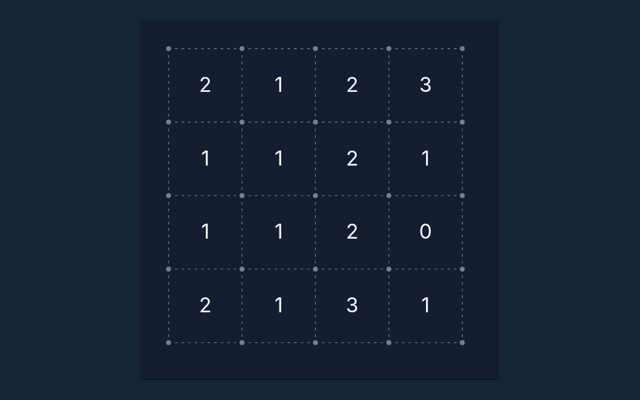
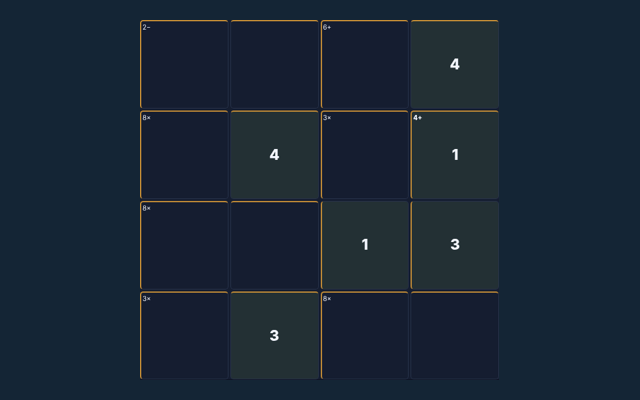
Try Kakuro at your own pace and keep its objective in view. Complete a 4×4 sum grid with digits 1–9, no repeats in any row or column, and the displayed totals. Use the example below to understand a decision. Read the objective before making your first input. Check the relevant rule before repeating a move.
Practise sums on twelve small, unblocked 4×4 grids. These teaching boards use whole-row and whole-column totals rather than the blocked runs of classic Kakuro.
Bring this focus to a round
After a move, check what changed. Decide which rule explains the new state before acting again. Use the example to check your reasoning.
The objective of a round
Complete a 4×4 sum grid with digits 1–9, no repeats in any row or column, and the displayed totals. Keep that objective in view throughout the round. Start with a deliberate move.
The playing sequence
- Compare a row total with its fixed entries.
- Use the column total for the same blank.
- Enter digits 1–9.
- Check puzzle verifies totals and non-repetition.
Getting comfortable with the controls
Click or tap squares or graph edges. Number boards include a digit pad. Undo reverses the previous change; Check puzzle validates the solution. Use the control method described here for this activity. Read the example below alongside these instructions.
Follow the example
A row total 18 with fixed values 2, 4 and 7 requires 5 in the remaining cell. Focus on why the action is allowed, not only its outcome. Notice the change in the playing area.
An important reminder
Repeated digits in a run are forbidden even when the sum matches. Compare the situation with the worked example. Locate the buttons and input area before beginning a long round. Use the on-screen labels to avoid an accidental restart.
Helpful answers for players
When I return, what is the goal of Kakuro?
Here is the relevant explanation: Complete a 4×4 sum grid with digits 1–9, no repeats in any row or column, and the displayed totals.
While learning, how do I control Kakuro?
Click or tap squares or graph edges. Number boards include a digit pad. Undo reverses the previous change; Check puzzle validates the solution.
On this playing page, what example helps explain Kakuro?
Here is the relevant explanation: A row total 18 with fixed values 2, 4 and 7 requires 5 in the remaining cell.
While learning, what should I watch out for in Kakuro?
For clarity: Repeated digits in a run are forbidden even when the sum matches.
What format does Kakuro offer?
Practise sums on twelve small, unblocked 4×4 grids. These teaching boards use whole-row and whole-column totals rather than the blocked runs of classic Kakuro.
Before I begin, which play mode does Kakuro use?
Here is the relevant explanation: The mode on this page is Solo. Same-device play uses one screen; this game library does not provide internet matchmaking.